
Over the past two years, my student evaluations have reflected a practice that is described as clear, engaging, and deeply supportive. Learners across both in-person and online sections frequently applaud my preparation, inclusive classroom climate, and ability to connect course material to their experiences. The most common praise centers on my openness, responsiveness, and skill in encouraging participation, even in asynchronous or online formats.
When creating the “Texts and Technologies” certificate, I envisioned a program that imparts conventional skills while also challenging students to become more proficient with digital technologies. More importantly, I wanted courses to be “collaboratories” where participants could work with current tools to create the new media where their writing might eventually find a place. Experiential learning, such as that found in my “Introduction to Professional and Technical Writing” course, has students working with clients indirectly.
Responding to Crisis in the Classroom
As a former communications contractor located in a hurricane-prone coastal region, I have assisted in coordinating emergency responses to crises of natural, political, and technological origins. These experiences were transformative in that they not only informed my worldview but also how I might best serve.
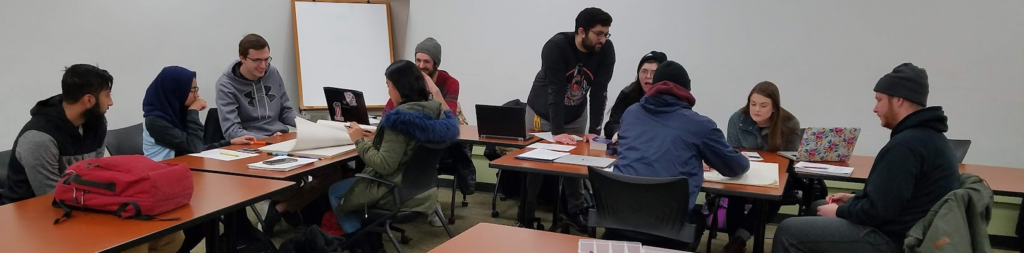
Upon reflection on my time at UWGB, I have found that my ability to anticipate and respond to crisis has contextualized and guided my work. This is a perspective that draws from my professional background in emergency preparedness and communications. Our current crisis – a combination of COVID’s longtail and the haphazard adoption of generative artificial intelligence (GAI) – now compels my scholarship, teaching, and service.
In the classroom, I returned to pedagogical questions: what do writing students need to be resilient and responsive to challenging times? I witnessed how the release of GAI seemed to rekindle the same animosity, uncertainty, and fear that I’d seen in previous crises. The difference was that I was now in a position to address the crisis-at-hand through experimentation and engaged critique. I have challenged students to be more accountable, publicly-engaged, honest, and thoughtful about the impacts these tools will have on their aspirations. My hope is that I will continue to address these and other crises alongside the community.
